

Custom Magnesium Die Casting Services – High Quality Magnesium Alloy Die Cast Parts Manufacturer

From material research and development, product design, mold design, precision casting, and machining to surface treatment, we ensure every step of the magnesium die casting process is executed flawlessly, providing one-stop lightweight and high-performance component manufacturing solutions for various industries. JUNYING’s extensive experience in the die casting field enables us to handle complex projects with precision and attention to detail, focusing on the research, production, and sales of lightweight high-pressure magnesium alloy die casting products. Our high-quality magnesium alloy die cast parts and products are used in new energy vehicles, electronic 3C products, rail transit, 5G communication equipment, and the low-altitude economy. Our advanced die casting processes and strict quality control measures ensure the consistent delivery of first-class products.

magnesium die casting

What is Magnesium Alloy Die Casting?

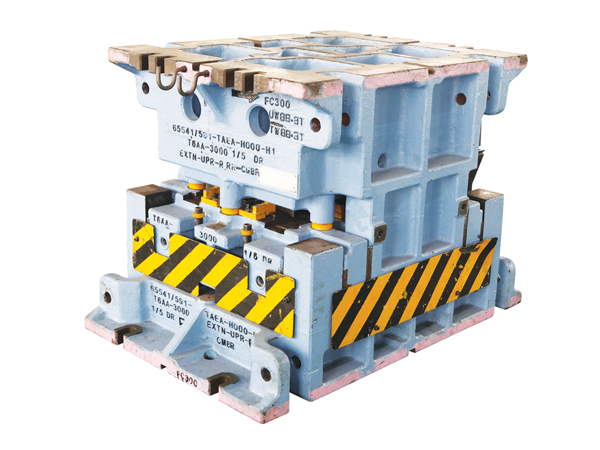
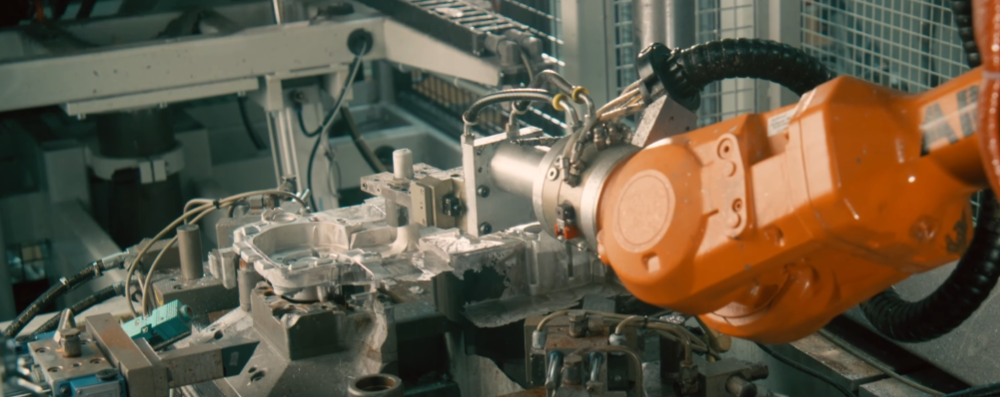
Magnesium alloy die casting is a high-pressure, high-speed forming method that integrates the die casting machine, mold, and alloy as a unified system. The process closely couples pressure, speed, and timing to achieve stable and precise replication of castings. Compared to aluminum alloy die casting, magnesium alloys have a lower heat capacity, and their filling and solidification processes are more rapid. This places higher demands on the energy reserve of the die casting machine, the filling speed, and the stability of temperature control. To ensure safety and material efficiency, the melting and pouring stages are usually equipped with dedicated furnaces that use protective gases to effectively isolate the surface of the melt pool, enabling precise metered pouring and consistent temperature control.

Magnesium alloys have a relatively low melting point, and their density, specific heat, and latent heat of solidification are all lower than those of aluminum alloys. During the melting and die casting process, they do not react with iron, resulting in lower energy consumption for melting and faster solidification – typically shortening the injection cycle by about 20% to 30%. In terms of mold life, magnesium alloy die casting molds can usually reach over 200,000 cycles, with some cases reported to reach the million level. It should be noted that molten magnesium is highly prone to oxidation and combustion, and its sensitivity to hot cracking is higher than that of aluminum alloys, which makes the processes of melting, pouring, and mold temperature control more complex.

Advantages of Magnesium Die Casting

Magnesium die casting offers a number of performance and manufacturing benefits:
  • Lightweight Components: Magnesium’s density is only about two-thirds that of aluminum, enabling the production of lighter parts.
  • Excellent Flow Properties: The superior fluidity of magnesium alloys allows manufacturers to create parts with finer details and thinner walls than those made from aluminum alloys.
  • Thermal Conductivity and Electromagnetic Shielding: These properties make magnesium alloys valuable in electronics manufacturing.
  • Recyclability: Magnesium components and production waste can be melted and reused repeatedly, making magnesium a practical choice from a sustainability standpoint.
  • Vibration Damping and Sound Insulation: The material’s inherent properties help to dampen vibrations and insulate against sound.
  • Efficient Production: Magnesium alloys have lower melting points and energy requirements compared to aluminum, resulting in faster solidification and shorter injection cycles, reducing cycle times by up to 20-30%.
  • Long Tool Life: Molds used for magnesium die casting often last for more than 200,000 cycles, with some exceeding 3 million.
  • Designing the process requires careful selection of machine type, control of mold and pouring temperatures, and attention to gating and overflow systems to ensure consistent product quality.

JUNYING’s strict process control and commitment to quality guarantee reliable, high-precision magnesium die cast parts for automotive, aerospace, electronics, and many other industries.

Applications of Magnesium Die Casting

Magnesium die casting finds use across a broad spectrum of industries due to its unique combination of low weight, strength, and design flexibility. Common applications include:
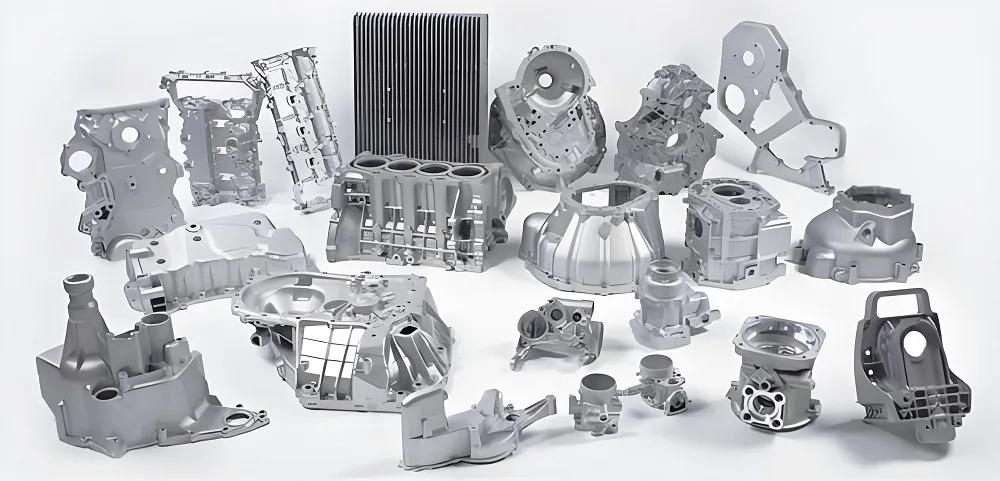
  • Automotive Components: Parts such as dashboard structures, seat frames, wheels, and crankcases.
  • Electronics: Housings for computers, smartphones, and other consumer devices benefit from the material’s shielding and lightweight properties.
  • Power Tools: Chainsaw crankcases and protective guards are often made from magnesium alloys.
  • Aerospace: Aircraft parts take advantage of magnesium’s low density and high strength-to-weight ratio.
  • Communications and Instrumentation: Precision components in these fields leverage magnesium’s dimensional stability and electromagnetic shielding.
  • Others: Magnesium alloys are also widely used in machinery manufacturing, sports equipment, medical equipment and other fields.

Production plants dedicated to magnesium die casting, such as advanced facilities in Europe, routinely supply components to global assembly plants for use in chainsaws, power tools, and more.

Magnesium Alloy Types for Die Casting Parts

Magnesium used in die casting is rarely pure; it is alloyed with elements including aluminum, zinc, manganese, silicon, and rare earths to achieve specific characteristics. The industry commonly follows ASTM guidelines for designating magnesium alloys. These designations use two capital letters to indicate the two main alloying elements, listed in order of their proportions, followed by numbers indicating their relative content. Popular die casting alloys include AZ91, AM60, and others, each offering a balance of mechanical and physical properties suited to specific applications.

AZ91D

The most commonly used magnesium alloy for die casting, offering the best overall performance. It is suitable for large-scale, precision die-cast parts in industries such as automotive and electronics.

AM60/AM50

These alloys feature higher ductility and toughness, making them ideal for components that require greater impact resistance and plasticity, such as automotive seat frames and wheels.

AE42

This alloy has excellent corrosion resistance and is suitable for parts used in high-temperature, high-humidity, or corrosive environments.

Magnesium Chemical Composition Chart

Alloy TypeAl (%)Mn (%)Zn (%)Si (%)Cu (%)Ni (%)Fe (%)Others (%)
AZ91D8.3–9.70.15–0.500.35–1.0≤0.1≤0.03≤0.002≤0.0050.02
AM60B5.5–6.50.24–0.60≤0.22≤0.10≤0.03≤0.002≤0.0050.02
AS41B3.5–5.00.35–0.70≤0.120.5–1.5≤0.02≤0.002≤0.00350.02

Magnesium Mechanical Properties Table

Alloy TypeTensile Strength (MPa)Yield Strength (MPa)Compressive Strength (MPa)Shear Strength (MPa)Fatigue Strength (MPa)Impact Strength (J)Elongation (%)Hardness (BHN)Young’s Modulus (GPa)Poisson’s RatioSpecific Heat (KJ/kg·K)
AZ91D230160165140702.2375450.37373
AM60B220120130100706.16–862450.35373
AS41B215140140N/AN/A4.1675450.37373

Magnesium Physical Properties Table

Alloy TypeDensity (g/cm³)Solidus (°C)Liquidus (°C)Melting Range (°C)Specific Heat (J/kg·°C)Thermal Expansion (μm/m·K)Thermal Conductivity (W/m·K)Electrical Resistivity (μΩ·cm)Electrical Conductivity (MS/m)Coefficient of Friction (mm/N)
AZ91D1.81470595625–7001.0525.07214.16.60.35
AM60B1.79540610650–6951.0726.26212.57.10.31
AS41B1.77565620660–6951.0226.168N/AN/A0.35