

What is Mold Design and Manufacturing?
Mold design and engineering is the process of creating and developing molds used to shape and produce plastic or metal parts with precision and consistency. It involves designing the mold’s cavities, cores, cooling channels, ejection systems, and gating mechanisms to meet specific product requirements, material properties, and production volumes. Skilled engineers use CAD software, mold flow analysis, and prototyping to optimize part manufacturability, ensure dimensional accuracy, and minimize defects. Effective mold design and engineering not only improve product quality but also enhance production efficiency, reduce costs, and extend the lifespan of the molds.
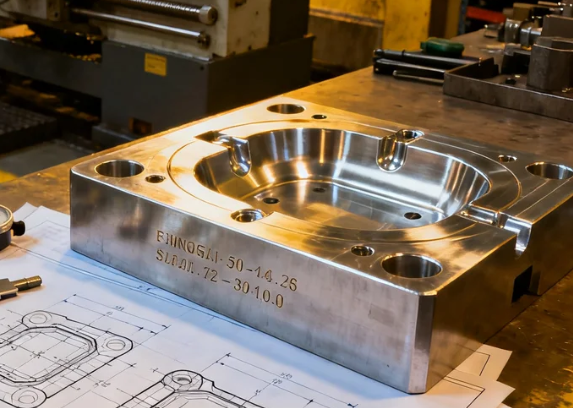
Advantages of Injection Molding Design
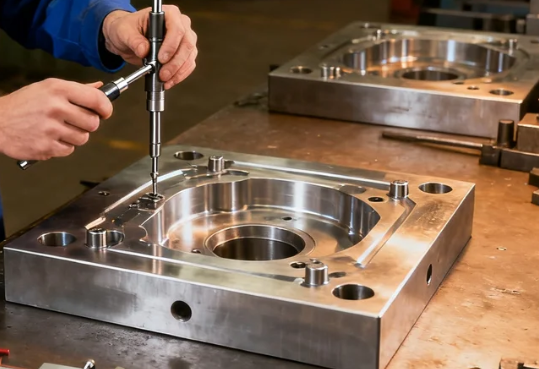
Injection molding design offers numerous advantages, including ensuring product functionality and reliability by assessing part usage, strength, and environmental requirements to meet performance demands. It enhances cost efficiency through simplified part and tool designs, minimizing downtime and extending mold durability. Quality control is improved with systematic design reviews, CAD checks, and in-process inspections, while flexibility in material use allows engineers to select the right resins for demanding applications. Experienced engineers can quickly solve challenges related to gating, cooling, and venting, and innovative technologies like 3D printing and hybrid processes enable faster prototyping and mold creation. With seamless in-house support, modifications and improvements can be implemented rapidly, reducing downtime and ensuring timely delivery for customers.
What Materials Commonly Used in Injection Molding Design?
1020 Carbon Steel – For ejector plates and retainer plates; easily machined and welded; carburize if hardening is needed.
1030 Carbon Steel – Mold bases, ejector housings, clamp plates; stronger than 1020; can be hardened to Rc 20–30.
1040 Carbon Steel – Support pillars; good compressive strength; can be hardened to Rc 20–25.
4130 Alloy Steel – Cavity/core retainer plates, support plates, clamping plates; Rc 26–35.
6145 Alloy Steel – Sprue bushings; Rc 42–48.
S-7 Tool Steel – Shock-resistant, wear-resistant; interlocks and latches; Rc 55–58.
O-1 Tool Steel – General-purpose, small inserts and cores; Rc 56–62.
A-2 Tool Steel – Hobs and slides; good abrasion resistance; Rc 55–58.
A-6 Tool Steel – Optical-quality cavities and cores; Rc 56–60.
D-2 Tool Steel – High chromium/carbon; gate inserts, lifters, slides; Rc 58–60.
H-13 Tool Steel – Ejector pins, sprue pullers, leader pins; annealed 15–20 Rc, hardened up to 60 Rc.
P-20 Tool Steel – Prehard, cavities, cores, stripper plates; Rc 28–40; good machinability and polishability.
420 Stainless Steel – Chemical-resistant applications (e.g., PVC molding); cores and cavities; annealed 15–25 Rc, hardened 55–60 Rc.